 All Dry Services of San Diego

 60 Min Response Time
What to Do After Flood Damage in San Diego?
After flood damage in San Diego, your first job is keeping everyone safe. Stay out of unsafe areas, stop additional water from entering if possible, and begin the drying process as soon as it is safe.
Acting quickly can help reduce structural damage, lower the risk of mold growth, and make cleanup much more manageable.
Whether the flooding was caused by heavy rain, a burst pipe, a sewage backup, or an appliance leak, following the right steps in the right order keeps the damage from spreading.
This guide walks San Diego and North County homeowners, landlords, property managers, and business owners through what to do after flood damage, when cleanup may be safe, and when it is time to call a professional restoration company.
Table of contents:
- Quick Checklist After Flood Damage
- Flood Damage in San Diego Can Get Worse Quickly
- Step 1: Stay Safe Before Entering the Home
- Step 2: Stop More Water From Entering If Possible
- Step 3: Document The Damage Before Cleanup
- Step 4: Remove Standing Water Safely
- Step 5: Start Drying The Home Quickly
- Step 6: Prevent Mold After Flood Damage
- Step 7: Clean And Sanitize Affected Areas
- Step 8: Sort What Can Be Saved And What Should Be Removed
- Flood Damage Cleanup In San Diego And North County
- FAQs
- Final Takeaway
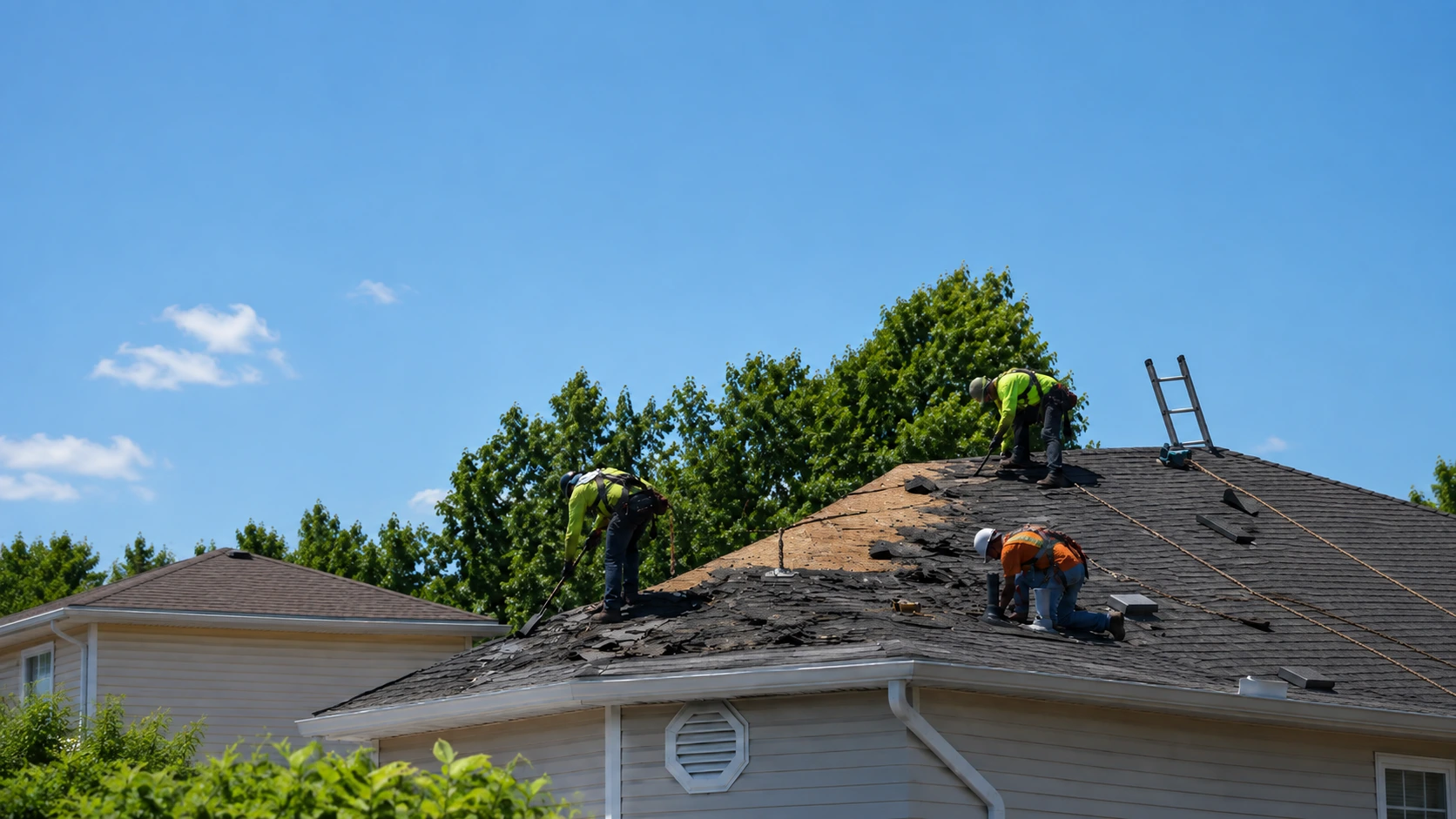
Quick Checklist After Flood Damage
The first few hours after flood damage can make a big difference, so use this checklist to protect your safety and limit further damage.
- Stay out until it is safe: Deep water, damaged walls or doors, or any doubt about electrical hazards means wait.
- Avoid standing water: Storm runoff and sewage backups are contaminated. Floodwater also hides sharp debris and live current.
- Turn off the electricity only from a dry, safe location: If you can reach your home’s main electrical panel without walking through water, shut off the power. If the panel is near standing water, leave it alone and call the utility company or an electrician.
- Shut off the water source if it is a plumbing issue: Find the shutoff valve and close it.
- Watch for signs of serious hazards: Leave immediately if you smell gas, notice sewage backing up, see ceilings beginning to sag, or feel floors that are soft, uneven, or unstable.
- Move people and pets to a safe, dry area: Keep children and pets away from flooded rooms until the property has been inspected and cleaned.
- Take photos before moving anything: Photograph every affected room, damaged furniture, flooring, walls, appliances, and personal belongings.This is your record for repair estimates and cleanup planning.
- Remove standing water only if it is safe to do so: A wet vacuum, pump, or buckets can help with small amounts of water after electrical hazards have been ruled out. Stop if the water is contaminated.
- Start drying as soon as possible: Open windows if the weather allows, run fans and dehumidifiers, and pull out wet rugs and cushions.
- Never run a generator indoors: If the power is out, keep generators and gas-powered pumps outside and at least 20 feet from any door, window, or vent.
- Call a professional restoration company if water reached walls, flooring, or multiple rooms, or if it involved sewage: Moisture inside drywall, insulation, and subfloors keeps causing damage after surfaces look dry.
Flood Damage in San Diego Can Get Worse Quickly
Floodwater can carry dirt, bacteria, sewage, and debris while also soaking into drywall, insulation, subfloors, and hidden spaces behind walls where moisture is difficult to see.
Mold can begin to develop within 24 to 48 hours under these conditions, making rapid water removal critical. Many local properties also deal with roof leaks, garage flooding, slab-level moisture, and coastal humidity, all of which can slow the drying process and increase the chance of mold growth.
Acting quickly to remove water and thoroughly dry the affected areas helps limit structural damage, protects indoor air quality, and reduces costly repairs later.
Step 1: Stay Safe Before Entering the Home
Your priority is making sure the property is safe to enter. Flood damage from heavy rain, burst pipes, sewage backups, or overflowing appliances can create hazards that are not always visible, so take a few minutes to check the area before going inside.
Check For Electrical Hazards
Standing water and live wiring are a dangerous combination, and you often cannot tell from a doorway whether power is still running to an outlet or appliance. Locate your main electrical panel: if it is in a dry, accessible spot, shut off the power before stepping inside.
If getting to it means wading through water or entering a damaged room, do not risk it. Call your utility provider or a licensed electrician instead.
Watch For Gas, Sewage, And Structural Damage
A gas smell or hissing sound near a line means you leave the property right away and call for help from a safe distance. Don’t flip light switches, light a match, or use anything that could spark on your way out. The same goes for sewage backup, which introduces bacteria and contamination that go well beyond dirty water.
Before stepping further inside, scan for sagging ceilings, cracked walls, warped flooring, or beams that look compromised. These are signs that the structure itself may not be safe to walk through.
Wear Protective Gear
If it is safe to enter, wear waterproof boots, rubber gloves, long sleeves, long pants, and eye protection while inspecting the damage. An N95 respirator is a good idea if you see mold, dried sewage residue, or heavy dust from damaged building materials.
Avoid touching your face, keep any cuts covered when handling wet materials, and wash your hands thoroughly afterward. Keep children and pets away from affected areas until the property has been cleaned and dried.
Step 2: Stop More Water From Entering If Possible
Once the area is safe, stop the water source if you can do so without putting yourself at risk. If the flooding is caused by a burst pipe, leaking water heater, washing machine, dishwasher, or another plumbing problem, shut off the home’s main water supply to prevent additional damage.
If floodwater is coming from heavy rain, storm runoff, or a sewage backup, do not try to stop it on your own. If the storm is ongoing or more rain is expected, sandbags or temporary barriers placed at doorways and low points help reduce further water entry.
Move important documents, electronics, and other valuables to a dry area if they have not been exposed to contaminated floodwater. Photograph them first if you can.
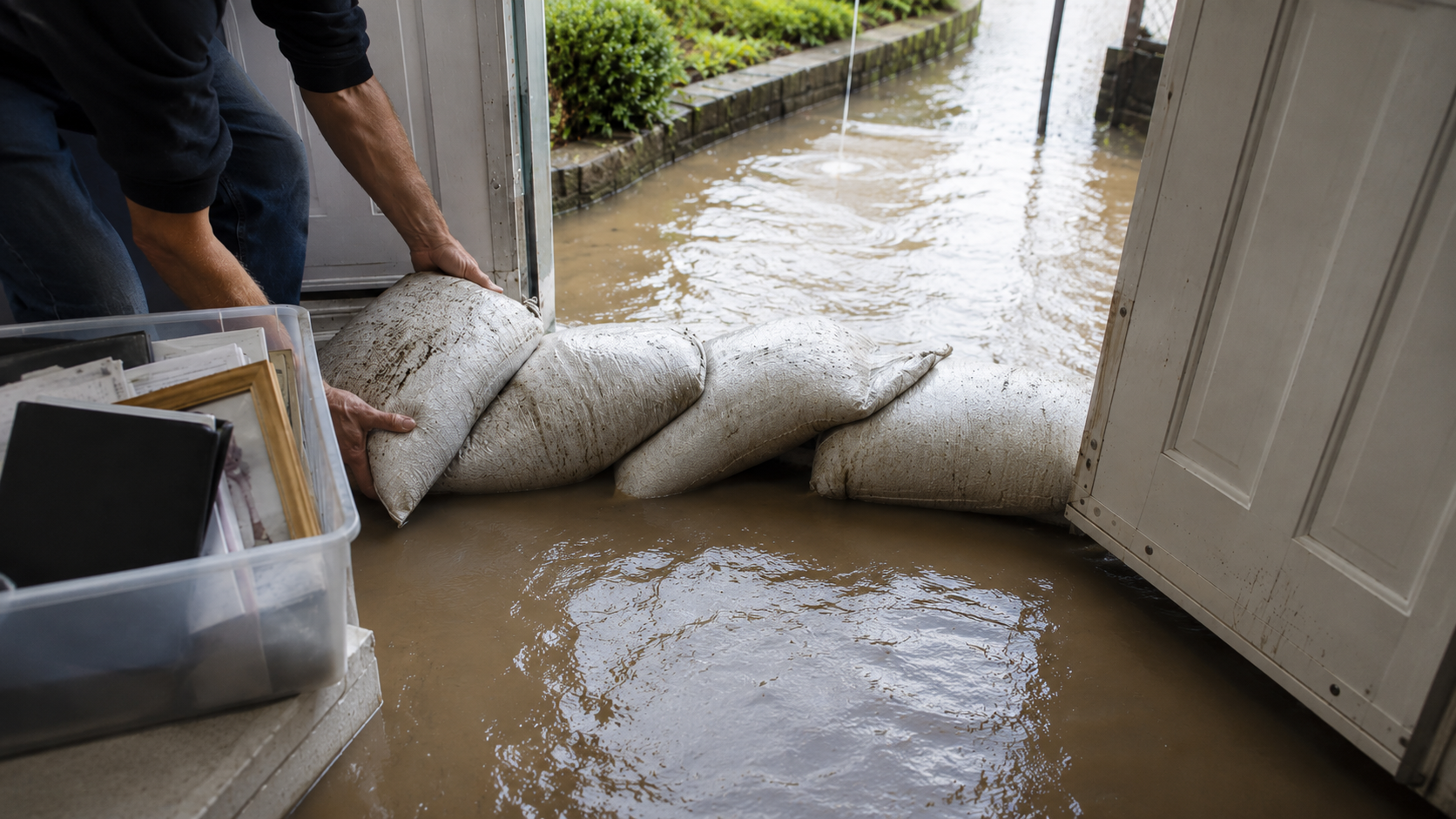
Protect Your Property Before Damage Gets Worse
Fast emergency water extraction and restoration can help reduce structural damage and mold growth.
Step 3: Document The Damage Before Cleanup
Before you start removing water or moving belongings, take a few minutes to document the damage clearly. This information can make it easier to plan repairs, compare estimates, and keep track of everything that needs to be replaced or restored.
- Take wide photos and close-ups: Capture each affected room from several angles, then take close-up photos of damaged materials and belongings.
- Photograph water lines on walls: Water marks can show how high the flooding reached and help identify areas that may need drying or repairs.
- Capture all damaged materials: Photograph flooring, baseboards, cabinets, drywall, doors, appliances, furniture, and any visible signs of swelling, staining, or warping.
- Make a list of affected rooms and materials: Write down each room with water damage and note the materials involved, such as carpet, hardwood flooring, drywall, insulation, or cabinetry.
- Save receipts for cleanup supplies and emergency services: Keep receipts for items such as pumps, fans, dehumidifiers, tarps, cleaning products, or emergency water removal services to maintain a complete record of your cleanup efforts.
Step 4: Remove Standing Water Safely
Removing standing water quickly helps reduce damage, but only if the area is safe to work in. Small amounts of clean water from a plumbing leak or appliance overflow may be manageable, while larger floods, sewage backups, and stormwater often require professional equipment and protective measures.
When Small Cleanup May Be Safe
If the water came from a clean source and affected only a small area, you may be able to remove it with towels, a mop, a wet/dry vacuum, or a portable pump.
Confirm there is no risk of live electricity in the area before using any powered equipment, and keep the area well ventilated. Remove wet rugs and other loose items, and begin drying the space with fans and dehumidifiers as soon as possible.
Stop immediately if you discover hidden water under flooring, inside walls, or in areas where electricity may still be a concern.
When To Stop And Get Professional Help
Do not attempt to clean up floodwater from heavy rain, storm runoff, or sewage, since this is classified as “black water” and contains harmful bacteria, chemicals, and debris.
You should also call a restoration company if water has spread through multiple rooms, soaked drywall or insulation, reached hardwood flooring, or remained inside the property for more than a day.
Professional water damage restoration uses extraction, moisture detection, and structural drying to reach hidden moisture that household equipment can’t, reducing the risk of mold and long-term damage.
Step 5: Start Drying The Home Quickly
Drying should begin as soon as standing water has been removed, because moisture left behind can continue to damage building materials even after surfaces appear dry.
The goal is to remove both visible water and hidden moisture trapped inside the structure. With proper equipment, most materials take about 3 to 5 days to fully dry, though larger floods or extensive hidden moisture can take longer.
- Remove wet rugs and soft items: Remove rugs, cushions, curtains, and other absorbent materials that retain moisture and slow drying.
- Open windows only if the weather and air quality allow: Fresh air can help with drying, but keep windows closed during rain, high humidity, or poor outdoor air quality.
- Use fans and dehumidifiers if electricity is safe: Increase airflow and reduce indoor humidity to help dry affected materials more quickly.
- Never run a generator or gas-powered pump indoors: If the power is out and you’re using a generator, keep it outside and at least 20 feet from any door, window, or vent. Carbon monoxide has no smell and builds up fast. A battery-powered CO detector is worth having before you start.
- Dry baseboards, wall cavities, cabinets, and subfloors: Water often spreads behind walls, beneath flooring, and inside cabinets, where moisture can remain long after the surface appears dry.
- Use moisture meters to check what is still wet: They help identify hidden damp areas that cannot be seen by sight or touch alone.
- Bring in professional drying equipment when hidden moisture is present: Commercial air movers, dehumidifiers, and moisture detection equipment can dry structural materials more thoroughly than household equipment, helping reduce the risk of mold and long-term damage.
If floodwater has spread beyond a small area, All Dry Services of North County and San Diego provides 24/7 emergency water extraction, structural drying, and moisture detection to help prevent damage from worsening.
Their restoration team uses professional equipment to dry hidden moisture and get your property on the path to recovery as quickly as possible.
Hidden Moisture Can Lead to Mold
Our restoration team uses professional drying equipment to remove moisture you can’t see.
Step 6: Prevent Mold After Flood Damage
Once standing water is gone, the next priority is removing every source of hidden moisture before mold has a chance to grow.
Drying the home completely is just as important as removing the floodwater, because damp materials behind walls, under floors, and inside cabinets can continue to trap moisture.
How Fast Mold Can Start
Mold can begin growing within 24 to 48 hours when wet materials stay damp, but the more important factor at this stage is what is happening in the areas you cannot see.
Even if flooring or drywall feels dry to the touch, moisture may still be trapped underneath or inside the material. Starting structural drying as soon as possible gives you the best chance of preventing mold from spreading.
Materials That Need Removal
Some materials cannot be completely dried once they have absorbed contaminated floodwater or have remained wet for too long.
Carpet padding, wet insulation, water-damaged drywall, ceiling tiles, and swollen particle board need to be removed to eliminate trapped moisture.
A restoration professional can test surrounding materials to determine what can be dried and what should be replaced.
Signs Mold May Already Be Starting
A musty odor is often one of the first signs that moisture is still trapped inside the building. You may also notice dark spots on walls, ceilings, baseboards, or around cabinets, along with peeling paint or bubbling drywall.
Mold exposure can cause respiratory irritation, allergic reactions, and more severe symptoms in people with asthma or weakened immune systems, which is part of why acting quickly matters.
If these signs appear after flooding, mold remediation starts with finding the moisture source. Schedule a professional inspection as soon as possible to locate hidden mold and moisture before the damage becomes more extensive.
Step 7: Clean And Sanitize Affected Areas
Drying the property removes moisture, but cleaning and sanitizing remove dirt, bacteria, and other contaminants left behind by floodwater.
Once affected areas are dry, use this checklist to help determine what can be cleaned and when professional cleanup is the safer choice.
- Clean and sanitize hard surfaces: Floors, tile, concrete, countertops, metal, and other non-porous surfaces should be cleaned with soap and water first, then disinfected with an EPA-registered disinfectant or a diluted bleach solution. Never mix bleach with ammonia or any other cleaner as the fumes are dangerous. Wear gloves and eye protection, and keep windows open while you work.
- Know that some porous materials cannot be saved: Carpet padding, insulation, upholstered furniture, mattresses, and other absorbent materials exposed to contaminated floodwater cannot be cleaned safely and should be removed.
- Leave sewage-contaminated cleanup to professionals: Flooding caused by sewage backups or heavily contaminated stormwater requires specialized cleaning methods, protective equipment, and proper disposal of damaged materials.
- Do not ignore lingering odors: A musty or foul smell means moisture, bacteria, or contaminated materials are still present. Eliminating the source of the odor is more effective than simply using air fresheners or deodorizing products.
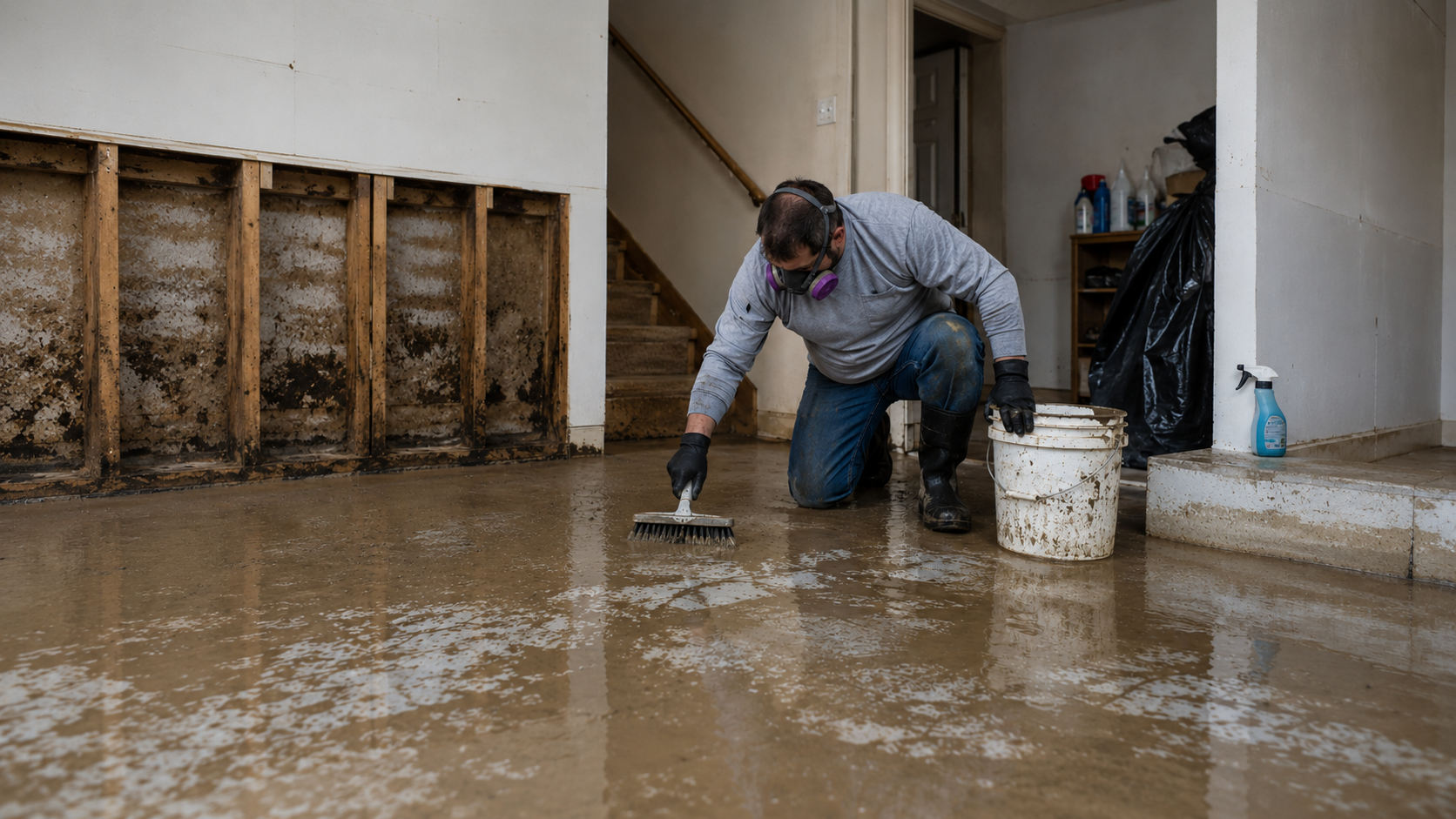
Step 8: Sort What Can Be Saved And What Should Be Removed
After the property is dry enough to work safely, separate items that can be cleaned from those that should be removed.
Move damaged materials out of the building as soon as possible, but keep walkways clear and avoid piling wet debris indoors where it can trap moisture and slow the drying process.
Bag contaminated materials separately before disposal, and check with your local waste service, since San Diego and North County municipalities often have specific guidelines for bulk pickup of storm-damaged debris.
If you are unsure whether an item can be safely restored, have it evaluated before returning it to your home or business.
Flood Damage Cleanup In San Diego And North County
Some flood damage can be addressed with basic cleanup, but many situations require specialized equipment to remove hidden moisture and restore the property safely.
If you notice any of the following, it is a good time to contact a professional flood damage restoration company.
- Standing water remains: Water that sits for too long can continue soaking into flooring, walls, cabinets, and structural materials.
- Water has spread under flooring: Moisture trapped beneath hardwood, laminate, vinyl, or tile flooring can lead to swelling, warping, and mold growth.
- Drywall or insulation is wet: Water inside walls often cannot be removed with household fans alone and may require professional structural drying.
- A sewage backup has occurred: Sewage-contaminated water contains harmful bacteria and should be cleaned using specialized equipment and safety procedures.
- There is a musty or moldy smell: Lingering odors often indicate hidden moisture or mold that still needs to be addressed.
- A commercial property has flooded: Offices, retail spaces, restaurants, warehouses, and other businesses often need fast restoration to reduce downtime and protect equipment.
- Multiple rooms are affected: Water that has spread throughout the property is more difficult to dry completely without commercial-grade equipment.
- The source of the water is unclear: A professional inspection can help identify hidden leaks, stormwater intrusion, plumbing failures, or other sources before repairs begin.
- Structural drying, odor removal, or sanitizing is needed: Professional moisture detection, commercial dehumidifiers, air movers, and sanitizing treatments help restore the property more thoroughly and reduce the risk of long-term damage.
Need Professional Flood Damage Cleanup?
We’re available 24/7 for water extraction, structural drying, sanitizing, and complete restoration.
FAQs
What should I do first after flood damage?
Your priority is safety. Stay out of the flooded area until you know it is safe to enter, avoid standing water, and check for electrical hazards, gas leaks, sewage, or structural damage. Once the property is safe, document the damage with photos before beginning water removal or cleanup.
Is floodwater dangerous inside a house?
Yes. Floodwater can contain bacteria, sewage, chemicals, sharp debris, and other contaminants that are not always visible. Avoid direct contact whenever possible; wear protective gear if you must enter the area; and keep children and pets away until the affected areas have been cleaned and sanitized.
How fast should I dry my home after flooding?
Start drying immediately, ideally within the first 24 hours. Mold can begin developing within 24 to 48 hours in wet conditions, and full drying typically takes 3 to 5 days with proper equipment. The longer moisture remains, the greater the risk of structural damage.
Can I clean up flood damage myself?
You can clean up a small amount of clean water from a plumbing leak or appliance overflow if the area is safe. Large floods, stormwater, sewage backups, or water that has soaked walls, flooring, or multiple rooms should be handled by a professional restoration company.
What should I throw away after a flood?
Items that absorb contaminated floodwater are often not safe to keep. Carpet padding, wet insulation, mattresses, pillows, ceiling tiles, and heavily contaminated fabrics are frequently discarded. Hard, non-porous materials such as glass, metal, and many plastic items can often be cleaned and sanitized.
How do I prevent mold after flood damage?
Remove standing water quickly and begin drying the property immediately using fans and dehumidifiers if it is safe to use electricity. Pay close attention to hidden moisture behind walls, beneath flooring, and inside cabinets. Trapped moisture can promote mold growth.
Why does my house smell musty after flooding?
A musty smell means moisture is still trapped inside the home or mold has started growing in hidden areas. Water behind drywall, under flooring, or within insulation can continue to cause odors even after visible surfaces appear dry. Finding and drying the hidden moisture is the best solution. If the smell persists after everything looks dry, leak detection can find the moisture source behind walls or under flooring.
When should I call a flood cleanup company?
Contact a flood cleanup company if the property has standing water, sewage contamination, water inside walls or under flooring, multiple affected rooms, or a persistent musty odor. Professional restoration equipment can detect hidden moisture, dry structural materials, sanitize affected areas, and help prevent long-term damage.
Final Takeaway
Flood damage can feel overwhelming, but taking the right steps in the right order can help limit further damage and make the recovery process much smoother. Focus on staying safe first, then remove water, dry the property thoroughly, sanitize affected areas, prevent mold, and make sure hidden moisture is addressed before repairs begin.
If you need professional help, All Dry Services of North County and San Diego is available 24/7 to respond to flood damage, burst pipes, sewage backups, appliance leaks, and storm-related flooding.
Their experienced restoration team provides fast water extraction, structural drying, moisture detection, sanitizing, and complete flood cleanup to help restore your home or business as quickly and safely as possible.
24/7 Flood Damage Restoration in San Diego
From burst pipes and storm flooding to sewage backups, we’ll restore your home or business quickly and safely.