 All Dry Services of Des Moines

 60 Min Response Time
Mold Removal & Remediation in West Des Moines, IA


Trusted Mold Remediation Experts Serving West Des Moines
Mold is the one household problem you can’t safely solve with a bottle of bleach and a weekend. It grows behind walls, inside HVAC ductwork, and under flooring. It releases spores into the air you breathe. And the wrong approach — scrubbing, spraying, or even just disturbing it without proper containment — sends contamination into rooms that were never affected to begin with. In West Des Moines, the conditions vary widely by neighborhood: a 1920s Valley Junction home with a stone-foundation basement faces different mold patterns than a Jordan Creek new build with a tight modern envelope. All Dry Services of Des Moines is the locally owned and operated mold removal and remediation team West Des Moines residents call when they want it done right the first time.
Our IICRC-certified technicians follow the ANSI/IICRC S520 Standard for Professional Mold Remediation — the industry benchmark. We contain the affected area with negative air pressure, remove contaminated materials, scrub the air with HEPA filtration, treat surfaces with EPA-registered antimicrobials, and correct the moisture source so the mold can’t come back. We serve all of West Des Moines — ZIP codes 50265, 50266, and 50325 — including Valley Junction, Jordan Creek, Western Hills, Fairmeadows, West Glen, and the Raccoon River Park area, spanning both Polk and Dallas counties. Learn more about why West Des Moines homeowners choose All Dry for restoration and remediation work.
Our Mold Remediation Process
Effective mold remediation isn’t just about killing what you can see. It’s about identifying every contaminated material, isolating the work area so spores can’t spread, removing the source of moisture that fed the mold, and confirming with air quality testing that the property is safe to occupy again. Here is what happens when you call All Dry Services for mold remediation in West Des Moines.
1. Free Inspection and Moisture Source Identification
Within an hour of your call, our crew is on-site for a free mold inspection. We identify visible growth, locate hidden contamination behind walls and under flooring using moisture meters and thermal imaging, and trace the moisture problem back to its source. Mold is always a moisture problem — a roof leak, plumbing failure, basement seepage from the Raccoon River floodplain, or chronic high humidity. If we don’t find and fix the source, the mold comes back. When the source is a hidden water leak, our leak detection team pinpoints it without invasive demolition.
2. Containment and Air Filtration Setup
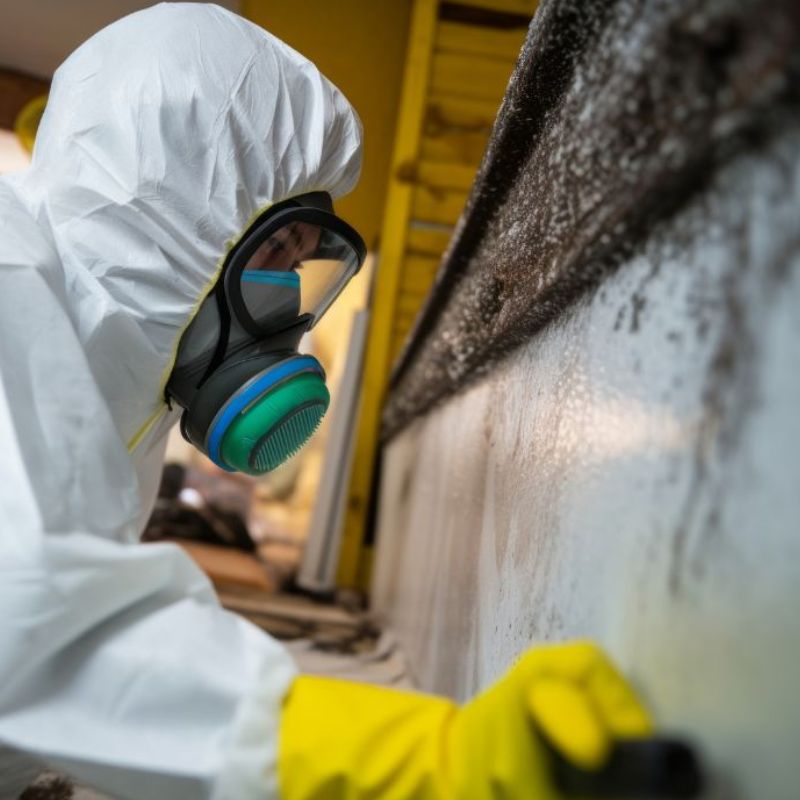
Before any mold is touched, we isolate the work area. Plastic sheeting and zipper doors seal off contaminated rooms, and negative air pressure is established with HEPA-filtered air scrubbers so contaminated air can only flow into the work zone — never out. This is the single most important step in protecting the rest of your home from cross-contamination. Skipping it is how DIY mold jobs and unqualified contractors turn a small problem into a whole-house problem.
3. Removal of Contaminated Materials
Porous materials saturated with mold — drywall, insulation, carpet padding, ceiling tiles — generally have to be removed and replaced. They can’t be cleaned. Semi-porous materials like wood framing are HEPA-vacuumed, wire-brushed if needed, and treated with antimicrobial. Non-porous materials like metal, glass, and tile are cleaned in place. Everything that’s removed is bagged inside the containment, double-bagged on the way out, and disposed of according to EPA guidelines.
4. HEPA Cleaning and Antimicrobial Treatment
After contaminated material is gone, every surface in the containment is HEPA-vacuumed and wiped down. We then apply EPA-registered antimicrobial solutions to treat any remaining mold spores and inhibit future growth. Air scrubbers continue running throughout to capture airborne spores released during the work.
5. Moisture Source Correction
Remediation that doesn’t fix the moisture source isn’t remediation — it’s a delay. Once the mold is removed, we address the underlying problem: drying out residual moisture in the structure, recommending repairs to the leak or seepage source, and in many cases coordinating with our water damage restoration team if a recent loss created the conditions in the first place. For homes near the Raccoon River corridor with chronic basement humidity, this step often includes recommendations for crawl space encapsulation, sump pump upgrades, or grading and drainage corrections to keep the problem from recurring.
6. Post-Remediation Verification
After cleaning is complete, we run a final inspection and offer post-remediation air quality testing through a third-party indoor environmental professional. Independent testing matters — it’s how you know the work was effective, and it’s the documentation that gives you, your insurance carrier, and any future buyer of the property real confidence the problem is solved.
7. Reconstruction and Final Restoration
Once the area passes clearance testing, we rebuild what was removed — drywall, insulation, flooring, trim — so you have a single point of contact from inspection through final walkthrough. The space is returned to you clean, healthy, and finished.
Common Causes of Mold in West Des Moines Homes
Mold needs three things to grow: moisture, an organic food source (drywall and wood qualify), and a stable temperature. West Des Moines homes provide the last two effortlessly. The variable is moisture — and the city’s climate plus its varied housing stock produce a predictable list of triggers.
Stone-foundation basement seepage in older homes: Valley Junction, Western Hills, and the older 8th Street corridor include homes with original limestone or rubble-stone basement foundations from the 1890s through the 1920s. These foundations wick groundwater more readily than poured concrete, and during West Des Moines’s wet springs the result is chronically damp basements that become ideal mold environments. Finished basements with carpet and drywall over these foundations are especially vulnerable — the materials trap moisture invisibly.
Raccoon River floodplain humidity: West Des Moines sits along the Raccoon River, with documented flood history in Valley Junction and the south-side neighborhoods. Even properties that never flood directly experience elevated groundwater pressure and chronic basement humidity during wet seasons. Sustained 60%+ relative humidity in any enclosed space is enough to grow mold.
Unresolved water damage: The single most common cause of indoor mold. A burst pipe, sump-pump failure, dishwasher leak, or sewer backup that wasn’t dried out properly will start growing mold within 24 to 48 hours. If you had a water loss months or years ago and you’ve never quite shaken the musty smell, you almost certainly have mold.
Tight-envelope new construction: The newer Jordan Creek and Mills Civic-area builds from the 2000s onward are constructed tight — energy-efficient, sealed against air leaks, and easier to trap moisture inside without proper mechanical ventilation. Mold issues in these newer homes usually trace back to bath fan venting problems, oversized HVAC equipment that short-cycles without dehumidifying, or unaddressed small leaks behind modern finishes.
Bathroom and kitchen moisture: Insufficient ventilation in bathrooms and kitchens lets steam and cooking moisture condense on cool walls and ceilings. Bath fans that vent into attics instead of outside, or simply weren’t run during showers, are classic mold incubators across all West Des Moines housing stock.
Roof leaks and ice dams: Iowa winters create ice dams that force water under shingles and into attics. The leak may be small enough that the homeowner never notices it on the ceiling — but mold will colonize the attic insulation, sheathing, and trusses. Severe weather events sometimes also require storm damage restoration alongside mold work.
Sewage backups and Category 3 water: Floor drain backups during heavy rain push Category 3 water into basements. That water carries bacterial and fungal contamination, and even after the water is gone, the residual contamination feeds aggressive mold colonization. These losses always involve professional sewage cleanup first.
HVAC and ductwork condensation: Air conditioners that aren’t draining properly, oversized systems that short-cycle without dehumidifying, and ductwork running through humid crawl spaces all create condensation that grows mold inside the system you’re using to circulate air through your home.

Get Help Now:
Call us at 515-552-1379 or use the form below to tell us more about your situation. We’re always happy to help!
Personalized Disaster Cleanup Services
Restoration Expertise You Can Count On
24/7 Emergency Services
We Never Use Subcontractors
Free & Transparent Estimates
100% Satisfaction Guaranteed
Get Your Property Restored
Restore Your Property the All Dry Way
1
Reach Out For Help
Contact us to schedule a time for our technicians to inspect your property.
2
Get Your Personal Plan
We’ll provide you with a personalized plan to restore your property.
3
Book Your Service
Schedule a day for the All Dry team to begin restoration and cleanup work.
4
Return to Normal
We remove all damaged materials and help you get back to normal.
Signs You Have a Mold Problem
Mold isn’t always obvious. The visible spot on the wall is sometimes a small part of a much larger colony hidden inside the wall cavity behind it. Watch for these warning signs and call for an inspection if you see them:
- Persistent musty, earthy smell — especially in basements, bathrooms, or near previous water damage
- Visible dark spots on walls, ceilings, baseboards, or window frames
- Discoloration on drywall that wasn’t there before — yellow, green, black, or fuzzy white patches
- Peeling paint, bubbling drywall, or warped trim near plumbing or exterior walls
- Residents experiencing unexplained respiratory irritation, congestion, headaches, or worsened allergies that improve when they leave the house
- Condensation on windows or exterior walls that doesn’t dry
- Any history of water damage that wasn’t professionally dried out
- Visible growth on HVAC vents or inside ductwork
Why Mold Is a Health and Property Concern
Mold remediation is a health-driven service, not just a cosmetic one. Mold releases microscopic spores and mycotoxins into the air, and prolonged exposure can affect people with allergies, asthma, immune sensitivities, or respiratory conditions. Common reported symptoms include nasal congestion, sinus irritation, coughing, throat irritation, watery eyes, headaches, and worsened asthma. Effects vary widely from person to person — some occupants notice nothing while others react severely in the same home.
Beyond health, mold damages the property itself. Drywall, insulation, wood framing, and flooring lose structural integrity when they’re chronically wet and mold-colonized. A small contained mold issue that costs a few thousand to remediate can become a tens-of-thousands rebuild if it spreads through walls, attic, or HVAC systems. And mold disclosure is a requirement when selling a home in Iowa — unaddressed mold can cost you a sale or force a price reduction at closing, particularly relevant in West Des Moines’s competitive housing market where median home prices run well above the metro average.
Why West Des Moines Homeowners Choose All Dry Services
Fast response, free inspections. Mold isn’t usually a same-hour emergency the way water or fire is, but it doesn’t get better with time. We schedule free inspections quickly and our trucks dispatch from our Des Moines base — the I-235 corridor puts West Des Moines among our closest service areas.
IICRC-certified technicians. Every crew lead holds active certification from the Institute of Inspection, Cleaning and Restoration Certification, including Applied Microbial Remediation Technician (AMRT) credentials. We follow the ANSI/IICRC S520 Standard on every job — the industry benchmark for mold remediation.
Containment and air filtration on every job. No exceptions. Even a small mold remediation gets proper plastic containment, zipper-door access, and negative air pressure with HEPA filtration. This is the difference between remediation that protects the rest of your home and the kind of cleanup that spreads spores into rooms that were never affected.
Direct insurance billing. Mold caused by a sudden and accidental water loss is often covered by homeowner’s insurance. We bill your carrier directly when coverage applies, and we provide every piece of documentation your adjuster needs — scope of loss, photos, moisture readings, and a clean Xactimate-formatted estimate.
We never subcontract. Every technician on your property is a direct All Dry Services employee, background-checked and trained in our process. Mold work requires technicians who understand containment, PPE protocols, and S520 — that’s not knowledge a rotating subcontractor crew brings. See our full approach and credentials.
Free, transparent estimates. No hidden fees, no scare tactics, no quotes that double after work starts. We tell you exactly what the work involves and what it will cost before we begin.
100% satisfaction guarantee. If anything in our remediation work doesn’t meet your standards, we come back and make it right at no additional cost.
Locally owned and operated. We live and work in the Des Moines metro. License #C144359 · License #LEAD-FIRM12829.
What Happens If You Ignore Mold
Mold doesn’t go away on its own and it doesn’t stay put. Every week that passes without proper remediation costs you in three ways:
It spreads. Mold colonies release millions of spores. Spores ride air currents, settle on damp surfaces, and start new colonies. A problem confined to one wall cavity in January is often a problem in three rooms by June.
It compounds health effects. Continued exposure means continued symptoms for sensitive occupants. Children, elderly family members, and anyone with asthma or allergies tend to react first — and reactions tend to escalate with longer exposure.
It damages structure and property value. Drywall, insulation, framing, and flooring degrade. The eventual rebuild scope grows. And mold disclosure during a future home sale either lowers your sale price or kills the deal entirely — a real concern in West Des Moines where median home prices and buyer expectations both run high. Cosmetic odors that persist after mold removal sometimes require ongoing odor removal treatment — another reason to address the source quickly.
Will Insurance Cover Mold Remediation?
It depends on the cause. Most homeowner’s policies in Iowa cover mold that resulted from a sudden and accidental water loss — a burst pipe, appliance failure, or storm-related water intrusion. Mold from gradual leaks, long-term humidity, or maintenance issues is typically excluded. Many policies also cap mold coverage at a specific dollar amount (often $5,000 or $10,000) regardless of the broader claim. We provide every piece of documentation your adjuster needs and can walk you through what we typically see covered. Contact us to talk through your specific situation before you file.
West Des Moines is home to the metro’s largest corporate corridor — Wells Fargo, Athene, EMC Insurance, Hy-Vee, and the Microsoft data centers along Jordan Creek. Have a commercial property loss with mold concerns? We handle commercial mold remediation in West Des Moines too, with the documentation and air-quality verification carriers, TPAs, and risk managers expect — and particular sensitivity to HVAC contamination in environments where indoor air quality and operational continuity matter.
Mold Remediation Throughout West Des Moines
All Dry Services covers all of West Des Moines, including ZIP codes 50265, 50266, and 50325, spanning both Polk and Dallas counties. Neighborhoods and areas we routinely service include Historic Valley Junction, Jordan Creek, Western Hills, Fairmeadows, West Glen, Ashawa Park, Glen Oaks, the Raccoon River Park area, and the newer developments along Mills Civic Parkway and EP True Parkway. We also serve adjoining communities including Des Moines, Clive, Urbandale, Windsor Heights, Waukee, and Norwalk.
Get Mold Remediation Help in West Des Moines Now
Mold doesn’t fix itself, and the wrong approach makes it worse. Call All Dry Services of Des Moines at 515-552-1379 to schedule a free mold inspection at your West Des Moines property. We answer live, we follow the ANSI/IICRC S520 Standard on every job, and we won’t stop until the air quality testing confirms your home is healthy again. You can also request an inspection online.
Got Questions? We Have Answers
Frequently Asked Questions
How quickly can All Dry inspect mold at my West Des Moines property?
Free mold inspections are typically scheduled within 24 to 48 hours of your call, and faster if there’s an active water loss or health concern. For emergency situations where mold is paired with a fresh water leak or recent flood, we dispatch the same day. Call 515-552-1379.
Can I just clean mold myself with bleach?
For a small, isolated spot under 10 square feet on a non-porous surface like tile or glass, careful DIY cleanup is sometimes appropriate. Beyond that, no — and bleach in particular is the wrong product. Bleach kills surface mold but doesn’t penetrate porous materials like drywall, so the colony regrows from inside. It also generates fumes and disturbs spores without any containment. Most DIY mold cleanups make the problem worse, not better.
Do you do mold testing?
We do visual inspections, moisture mapping, and surface sampling as part of every remediation project. For air quality testing — pre-remediation diagnosis or post-remediation clearance verification — we work with independent indoor environmental professionals (IEPs). Third-party testing matters because the same company shouldn’t be both diagnosing the problem and confirming the cleanup worked. That separation protects you and gives the air quality results real weight.
How long does mold remediation take?
It depends on the scope. A small bathroom remediation might be done in a day. A whole-basement project with significant material removal and reconstruction can run 1 to 3 weeks. Air quality clearance testing typically happens 24 to 48 hours after cleaning is complete. We give you a realistic timeline after the inspection, not a guess up front.
Is black mold dangerous? Is that what I have?
“Black mold” usually refers to Stachybotrys chartarum, which is one of many mold species that produces mycotoxins. It’s a real concern, but most mold that looks black isn’t actually Stachybotrys — many common indoor molds appear dark when they grow on wet surfaces. From a remediation standpoint, the process is the same regardless of species: contain, remove, treat, verify. If you want to know the specific species, that requires lab analysis of a sample.
Will mold come back after remediation?
Not if the moisture source was fixed. Mold needs moisture to grow — without it, spores can’t establish colonies. That’s why our process always includes identifying and correcting the underlying water problem, not just cleaning what’s visible. For older Valley Junction homes with stone foundations or basements prone to seepage, that may mean recommendations for crawl space encapsulation, sump system upgrades, or exterior drainage corrections in addition to the remediation itself. Remediation without moisture correction is temporary by definition
What does mold remediation cost in West Des Moines?
Cost depends on the affected area, how much material has to be removed, whether reconstruction is needed, and whether air quality testing is included. A small contained job might be a few thousand dollars; a large basement or attic remediation with significant rebuilding can run higher. We provide a free, transparent estimate after the inspection. If insurance applies — most commonly when mold resulted from a covered water loss — we bill your carrier directly. You can request an inspection here.
Do I need to leave the house during mold remediation?
For small, well-contained jobs, no — you can stay in unaffected areas while the work happens. For larger projects or remediations involving the HVAC system, temporary relocation is sometimes recommended for residents with respiratory sensitivities, immune issues, or young children. We’ll be straight with you about which scenario applies after the inspection.