 All Dry Services of Des Moines


 60 Min Response Time
Fire Damage Restoration in Clive, IA


Trusted Fire Damage Restoration Experts Serving Clive
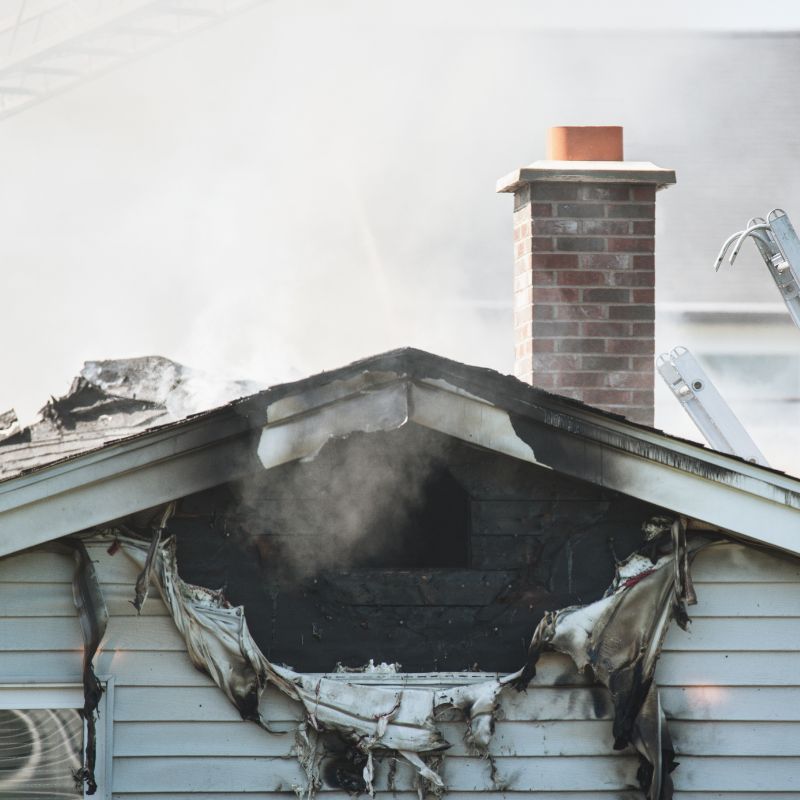
A fire is one of the most disorienting things that can happen to a family or business. Even after the flames are out, the damage keeps working — soot migrates through HVAC ducts into closets across the home, acidic smoke residue saturates drywall and insulation, and the water used to put the fire out begins its own slow damage cycle. In Clive — one of the metro’s most affluent communities with the bulk of its housing stock built between 1985 and 2005 — the conditions create specific complications: higher-end finishes like hardwood floors, custom cabinetry, and natural-stone surfaces that are expensive to clean and even more expensive to replace; mature wood-framed homes that hold smoke odor deeply in 30-40-year-old materials; integrated central HVAC distributing soot through every room; and homes along Walnut Creek and the Greenbelt Trail with tree-lined exposure that can create wildland-urban interface ember risk during grass fire conditions. All Dry Services of Des Moines is the locally owned and operated fire damage restoration team Clive residents call when they need someone on-site fast, with the certifications and equipment to put the property back together properly.
Our IICRC-certified technicians arrive in 60 minutes or less, 24 hours a day, to secure the structure, remove debris, address smoke and soot, and coordinate the full restoration with your insurance carrier. We back every project with a 100% satisfaction guarantee, and serve all of Clive — ZIP code 50325, spanning both Polk and Dallas counties — including Country Club Glen, Huntington Ridge, Wellington Ridge, Walnut Ridge, Westview Bend, Indian Hills, the Hickman Road corridor, and the established neighborhoods along the Greenbelt Trail. Learn more about why Clive homeowners choose All Dry for emergency restoration.
Our Fire Damage Restoration Process
Fire damage restoration is more complicated than most homeowners realize. It involves stabilizing the structure, addressing water damage from firefighting efforts, removing soot before it permanently etches surfaces, neutralizing smoke odor at the molecular level, and rebuilding what can’t be saved. Here is what happens when you call All Dry Services for fire damage restoration in Clive.
1. Emergency Inspection and Damage Assessment
Within an hour of your call, our crew is on-site. We perform a top-to-bottom assessment that goes beyond the visible char — checking for compromised structural members, electrical damage, hidden smoke migration into HVAC and wall cavities, and the extent of water damage from suppression efforts. In Clive’s 1980s-2000s wood-framed homes with deep finished basements and connected attic spaces, smoke migrates through chases and stack penetrations far beyond the room of origin. We document everything with timestamped photography for your insurance file.
2. Emergency Board-Up and Tarp-Over
Fire-damaged structures are vulnerable to weather, theft, and further collapse. Our team secures broken windows and doors, installs roof tarps where the roof was compromised, and stabilizes the property so the restoration work can proceed safely. This step is critical — most homeowner’s policies require prompt mitigation to prevent secondary damage, and our board-up and tarp services satisfy that requirement.
3. Water Extraction and Structural Drying
Firefighting often leaves behind thousands of gallons of water. If that water sits, you compound the fire damage with mold and structural rot inside 48 hours. Clive’s 1980s-90s homes were built with dimensional lumber framing that holds up better to water exposure than newer engineered I-joists — but sustained moisture still warps hardwood flooring, delaminates subfloors, and saturates the higher-end finishes typical in Clive’s housing stock. Our crews extract standing water immediately and set commercial-grade air movers and dehumidifiers. For larger losses this overlaps with full water damage restoration — handled by the same team, so there’s no second contractor to coordinate.
4. Smoke, Soot, and Residue Removal
Smoke and soot are acidic and corrosive — they will permanently etch metal, glass, and finished surfaces if not removed quickly. We use HEPA vacuums, dry chemical sponges, and surface-specific cleaning agents to remove residue from walls, ceilings, cabinetry, and contents. Different fire types leave different residues — a kitchen grease fire requires a different approach than an electrical fire, a synthetic-materials fire, or a wood-burning fireplace flue fire (a real concern in Clive’s older housing stock with 30-40-year-old fireplaces and chimneys) — and we adjust the protocol accordingly. Lingering smoke smell after cleaning is addressed with our odor removal process below.
5. Deodorization and Air Quality Restoration
Smoke odor doesn’t live on surfaces — it embeds itself in porous materials like drywall, insulation, carpet padding, and HVAC ductwork. Surface cleaning alone won’t remove it. We use industrial ozone treatment, hydroxyl generators, and thermal fogging to break down odor molecules at the source. HVAC systems are inspected and cleaned because contaminated ductwork will reintroduce smoke odor every time the system runs — a particular concern in Clive’s homes where central HVAC has been in place for decades and the ductwork itself has accumulated dust and debris that traps and re-releases smoke residue.
6. Content Pack-Out and Cleaning
Salvageable belongings — clothing, electronics, furniture, documents, photographs — are inventoried, packed out, and cleaned at our facility using methods appropriate to each material. Items that can be restored are returned; items that can’t are documented for the insurance claim. For Clive’s higher-end housing stock, this often includes specialty contents — original artwork, antiques, designer furniture, electronics — that benefit from specialized restoration rather than replacement, protecting the value of items that are difficult or impossible to replace.
7. Reconstruction and Final Restoration
Once cleaning and drying are complete, we coordinate the rebuild — drywall replacement, flooring, painting, cabinetry, and finish work — so you have a single point of contact from the first emergency call through the moment you move back in. Matching finishes in Clive’s higher-end housing (hand-scraped hardwoods, custom millwork, natural stone) takes more care than production-grade rebuilds, and we document the entire scope of loss in the format your insurance adjuster needs.
Common Causes of House Fires in Clive
Clive’s housing profile — predominantly 1985-2005 construction with a smaller cohort of older homes near the original village center — produces a specific set of fire triggers. Knowing the common patterns helps homeowners spot risks before they become emergencies.
Kitchen and cooking fires: The leading cause of residential fires nationally and in Clive. Unattended pans, grease ignition, and oven malfunctions account for the majority of kitchen losses. Many Clive kitchens have been remodeled over the years with upgraded ranges and high-output cooktops — including induction and dual-fuel professional ranges in higher-end remodels — which produce more concentrated heat than the original 1980s-era appliances. Higher heat means faster grease ignition and a faster spread to surrounding cabinetry.
Wood-burning fireplace and chimney fires: Many Clive homes built in the 1980s and 1990s include wood-burning fireplaces, and 30-40 years of accumulated creosote in flues that haven’t been regularly inspected creates real chimney-fire risk. Iowa winters keep these fireplaces in active use, and chimney fires can spread to attic spaces and roof structures quickly. Annual chimney sweeping is the single most overlooked fire-prevention step in older Clive housing stock.
Electrical fires: Clive’s 1980s-90s housing stock is now well past the original service life of breakers, outlets, and switches. Aged GFCI/AFCI breakers may not trip when they should. Original receptacles loosen and develop arc faults. Additions and remodels often layer newer wiring onto older systems creating compatibility issues. And a small percentage of Clive’s oldest pre-1972 homes near the original village center may still have aluminum branch-circuit wiring, which is a documented fire-risk concern at connection points.
Heating system fires: Iowa winters mean furnaces, fireplaces, and space heaters run hard from November through March. Furnaces in 30-year-old homes that haven’t been recently serviced, clogged dryer vents in long basement runs typical of Clive’s housing stock, and combustibles stored too close to gas-fueled fireplaces are common heating-season triggers.
Lithium-ion battery fires: A growing fire-cause category — particularly relevant in affluent Clive households where EV chargers, e-bikes, e-scooters, power tools, and battery-powered yard equipment are common. Damaged or improperly charged lithium-ion cells can ignite intense, fast-spreading fires that are difficult to extinguish. Garage-charged EVs represent a meaningful and underappreciated fire risk.
Holiday and seasonal fires: Christmas trees, holiday lighting, candles, and outdoor grilling create a measurable spike in residential fires every year. Synthetic tree materials and decorative fabrics produce particularly toxic smoke.
Smoking-related fires: Cigarettes and smoking materials remain a leading cause of fatal home fires, often from smoldering material in upholstery or bedding.
Lightning and storm-related fires: Clive sits in Tornado Alley and direct lightning strikes during severe storms can ignite roof structures and electrical systems. Homes backing on the Greenbelt Trail or along Walnut Creek have additional ember exposure during grass and brush fire conditions. These losses frequently involve storm damage restoration as well, because the same event that started the fire often caused water intrusion.

Get Help Now:
Call us at 515-552-1379 or use the form below to tell us more about your situation. We’re always happy to help!
Personalized Disaster Cleanup Services
Restoration Expertise You Can Count On
24/7 Emergency Services
We Are Locally Owned and Operated
Free & Transparent Estimates
100% Satisfaction Guaranteed
Get Your Property Restored
Restore Your Property the All Dry Way
1
Reach Out For Help
Contact us to schedule a time for our technicians to inspect your property.
2
Get Your Personal Plan
We’ll provide you with a personalized plan to restore your property.
3
Book Your Service
Schedule a day for the All Dry team to begin restoration and cleanup work.
4
Return to Normal
We remove all damaged materials and help you get back to normal.
The Hidden Damage After a Fire
Most homeowners look at a fire scene and see what burned. The damage that creates the long-term problems is often what didn’t burn. Watch for these:
- Soot deposits on walls, ceilings, and contents far from the fire source — Clive’s mature wood-framed homes with stack penetrations and HVAC chases let smoke travel further than people expect
- Soot migration through central HVAC supply and return runs to every room in the house — particularly through ductwork that’s been in place for decades
- Acidic smoke residue that will etch glass, metal fixtures, and finished surfaces within days if not removed — a significant concern in Clive’s higher-end housing with designer fixtures, natural stone, and chrome/brass
- Water damage from firefighting efforts — often the single largest source of structural damage in a fire loss
- Mold growth in wet wall cavities and under flooring if drying isn’t started immediately — often requiring professional mold remediation
- Smoke odor embedded in drywall, insulation, decades-old carpet padding, and HVAC ductwork that holds the smell long after surface cleaning
- Compromised electrical wiring inside walls where heat damaged insulation
- Heat-warped hardwood flooring even in rooms not directly affected by flames
- Damage to electronic devices and battery systems from heat exposure — even devices that look undamaged may have compromised internal cells creating future fire risk
Why Clive Homeowners Choose All Dry Services
60-minute emergency response. We answer your call live, 24 hours a day, and our trucks are on the road within minutes. Clive is among our closest service areas — the drive from our Des Moines base via I-235, Hickman Road, or University Avenue puts most Clive calls on-site inside an hour.
IICRC-certified technicians. Every crew lead holds active certification from the Institute of Inspection, Cleaning and Restoration Certification, including Fire and Smoke Restoration Technician (FSRT) credentials. We follow industry-standard protocols on every job.
Direct insurance billing. Fire losses involve some of the most complex insurance claims a homeowner will ever file. We bill your insurance directly and provide the documentation your adjuster needs: scope of loss, content inventory, daily progress photos, and a clean Xactimate-formatted estimate. You focus on your family; we handle the paperwork.
Free, transparent estimates. No hidden fees and no surprise charges. We tell you exactly what the work involves and what it will cost before we start.
100% satisfaction guarantee. If anything in our restoration work doesn’t meet your standards, we come back and make it right at no additional cost.
Locally owned and operated. We live and work in the Des Moines metro. License #C144359 · License #LEAD-FIRM12829.
Why You Can’t Wait to Start Restoration
Fire damage is among the most time-sensitive emergencies a homeowner can face. Every hour that passes after the flames are out makes the damage harder and more expensive to reverse. Here is what waiting costs you:
Permanent soot etching: Soot is acidic. Left in place, it permanently discolors and pits glass, chrome, brass, marble, and finished metals within 72 hours. Items that could have been cleaned become items that must be replaced — a significant concern in Clive’s higher-end housing stock with designer fixtures, marble countertops, brass and oil-rubbed-bronze hardware, and natural-stone surfaces.
Compounding water damage: The water used to put the fire out continues to soak into floors, walls, and contents. Without prompt extraction and drying, you add full water restoration costs to an already significant fire claim.
Mold colonization: Wet materials inside a fire-damaged home are the ideal environment for mold growth, which typically begins within 24 to 48 hours. Once mold establishes itself, the cleanup expands to include mold remediation — significantly increasing scope and cost.
Deeper odor embedment: Smoke odor that sits for days migrates deeper into porous materials. Insulation, carpet padding, and HVAC components that could have been salvaged with prompt treatment often have to be removed and replaced. Even after rebuilding, lingering smells may require ongoing odor removal treatment.
Insurance complications: Most homeowner’s policies require prompt mitigation. Waiting too long can give your carrier grounds to deny coverage for damage they argue could have been prevented.
We Work Directly With Your Insurance Carrier
Fire claims are some of the largest and most complex losses a homeowner will ever file. The work goes far beyond cleaning — it involves structural board-up, content pack-out and inventory, depreciation valuations, and Additional Living Expense (ALE) coordination if you’re displaced. We have direct billing relationships with major carriers and provide every piece of documentation your adjuster needs to approve your claim quickly. Our reports use industry-standard Xactimate formatting and include itemized content lists, daily progress photos, and a complete scope of loss. If you’re unsure how to start your claim, contact us — we can walk you through what to expect before you call your carrier.
Clive has a significant commercial footprint along the Hickman Road and University Avenue corridors — the metro’s largest concentration of business hotels (Courtyard by Marriott, La Quinta, Residence Inn, Clarion, Wildwood Lodge), conference facilities, healthcare offices, and professional services. Have a commercial property loss? We handle large-loss commercial fire restoration too, with the documentation rigor that carriers, TPAs, and risk managers expect — and with the understanding that downtime in a Clive hotel or conference venue means lost room nights and event revenue every hour the property is out of service.
Fire Damage Restoration Throughout Clive
All Dry Services covers all of Clive, including ZIP code 50325, spanning both Polk and Dallas counties. Neighborhoods and areas we routinely service include Country Club Glen, Huntington Ridge, Wellington Ridge, Walnut Ridge, Westview Bend, Indian Hills, Karp Park, Rio Valley, Chautauqua Grounds, the Hickman Road corridor, and the established neighborhoods along the Greenbelt Trail and North Walnut Creek. We also serve adjoining communities including Des Moines, Urbandale, West Des Moines, Waukee, and Windsor Heights.
Get 24/7 Fire Damage Help in Clive Now
A fire is one of the worst days of your life. The work of recovery doesn’t have to be. Call All Dry Services of Des Moines at 515-552-1379 right now and a certified technician will be at your Clive property within 60 minutes. We answer live, we work directly with your insurance, and we won’t stop until your home is clean, safe, and back to normal. You can also request a free estimate online.
Got Questions? We Have Answers
Frequently Asked Questions
How fast can All Dry Services respond to a fire in Clive?
We guarantee a 60-minute response time anywhere in Clive, 24 hours a day, 365 days a year. From our Des Moines base, the I-235, Hickman Road, and University Avenue corridors put Clive properties among our fastest-response locations. Call 515-552-1379 the moment the fire department clears the scene.
What should I do before the restoration crew arrives?
Wait until the fire department confirms it’s safe to re-enter. Once cleared, do not turn on any electrical appliances, including HVAC, until they’ve been inspected — soot in the ducts will spread through the whole home. Don’t try to clean walls, ceilings, or upholstery yourself; aggressive cleaning often makes soot damage permanent on Clive’s higher-end finishes. Photograph everything for your insurance file if you can do so safely. Contact your insurance carrier and then call us.
Will homeowner's insurance cover fire damage restoration?
Yes, in nearly all cases. Standard homeowner’s policies in Iowa cover fire damage including the restoration, content cleaning, and Additional Living Expense if you’re displaced. We work directly with all major carriers and can contact our team to talk through coverage questions before you file. Save every receipt related to the loss — alternate lodging, meals, transportation — because those typically qualify for ALE reimbursement.
How long does fire damage restoration take?
It depends on the severity. A contained kitchen fire with mostly smoke and soot damage might take 1 to 2 weeks. A more significant loss involving multiple rooms, water damage from firefighting, and reconstruction can run 2 to 6 months from emergency response through final walkthrough — and Clive’s higher-end finish profile (hand-scraped hardwoods, custom millwork, natural stone) can add time at the rebuild stage if the original materials aren’t readily available. We give you a realistic timeline after the initial assessment, not a guess up front
Can my belongings be saved after a fire?
Often yes — far more than people expect. Soft goods (clothing, linens) typically clean up well with specialized laundering. Electronics depend on whether they were powered on during the fire and whether soot or water reached internal components. Photographs, documents, and artwork have their own restoration specialties. For Clive’s higher-end housing, we routinely encounter antiques, original artwork, designer furniture, and rare items that benefit from professional restoration rather than replacement — we inventory everything, pack out what’s salvageable, and document everything that isn’t for your insurance claim.
Do I have to leave my house during fire restoration?
Usually yes, at least temporarily. Most fire losses involve smoke contamination throughout the home, structural issues, or active demolition that makes the property unsafe or unhealthy to occupy. Your homeowner’s policy almost certainly includes Additional Living Expense coverage for alternate housing during restoration — we’ll help you document those expenses for your claim.
What does fire damage restoration cost in Clive?
Cost varies dramatically with the scope of the loss. A minor kitchen fire with smoke cleanup might be a few thousand dollars. A significant residential fire requiring full reconstruction can run six figures, and Clive’s higher-end housing with hardwood floors, custom cabinetry, natural-stone counters, and designer finishes tends to push reconstruction costs above the metro average. The good news: standard homeowner’s insurance typically covers fire restoration up to your policy limits. We provide a free, transparent estimate after the initial assessment, and we bill your carrier directly so you’re not financing the work.
Why does my house still smell like smoke after cleaning?
Because smoke molecules embed in porous materials — drywall, insulation, HVAC ductwork, carpet padding — that surface cleaning doesn’t reach. Decades-old ductwork and original 1980s-90s carpet padding hold smoke odor particularly stubbornly. Proper deodorization requires breaking down odor molecules at the source using ozone, hydroxyl generators, or thermal fogging, plus cleaning or replacing the porous materials that hold the smell. If you’re already living in a home with persistent smoke odor from a previous fire, our odor removal team can usually eliminate it.